

Release date:2024/03/28Source:Yi Chuang trade

Recently, the institute of economic system and management of the National Development and Reform Commission macroeconomic research institute has released a comprehensive study report on the chemical cycling of waste plastics, it shows that chemical cycle of waste plastics has become a new direction of plastic pollution treatment at home and abroad, and can turn"white pollution" into"oil field".
If 50% of our estimated 43m tonnes of plastic waste is incinerated or 2023, it would be equivalent to developing an oil field of more than 60m tonnes. If the existing 100 million tons of plastic waste can be recycled, equivalent to low-cost development of large-scale"urban oil field.". It is estimated that by 2035, if 30% of waste plastics are recycled chemically, about 108m tonnes of oil could be saved, equivalent to reinventing two Daqing Field states.
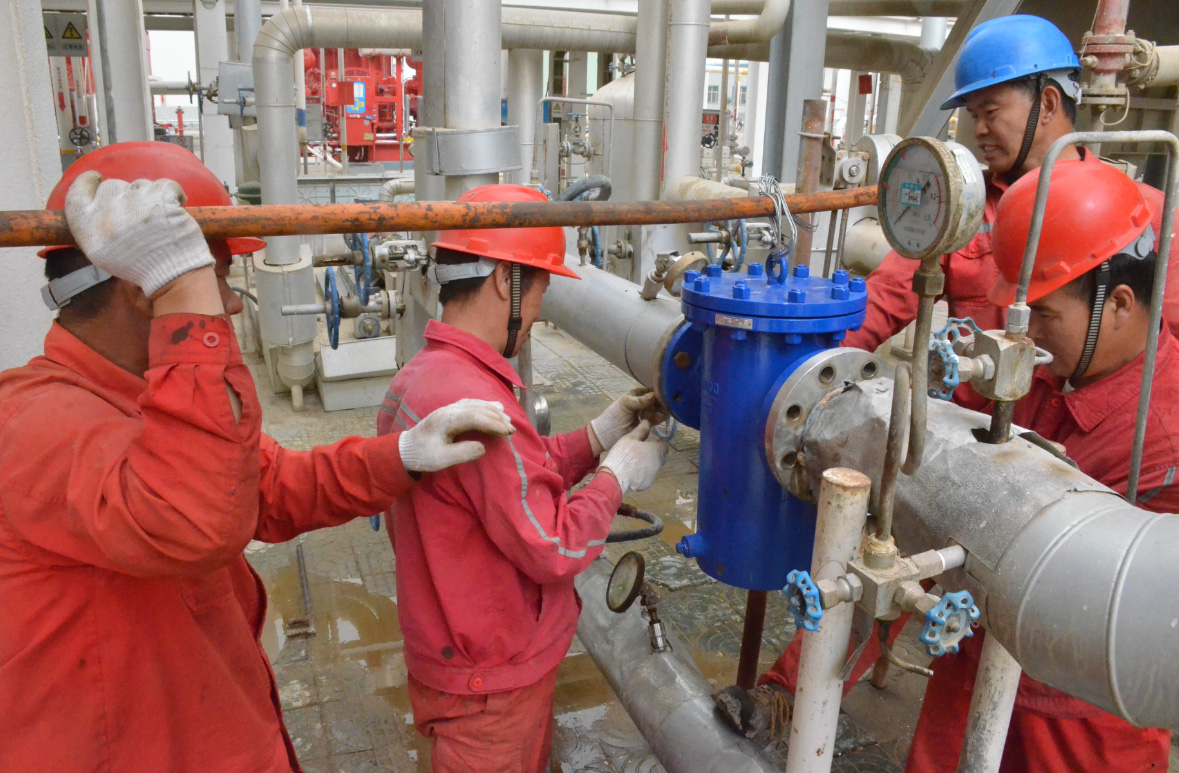
Chemical recycling and physical recycling are two main paths of recycling of waste plastics. The chemical cycle of waste plastics refers to the process of using waste plastics as raw materials to convert waste plastics into a certain proportion of plastic monomer and other chemical components by-product, and further produce plastics and other chemical products.
Experts believe that chemical recycling has a significant advantage over physical recycling. The chemical cycle has a wide range of raw materials adaptability, can be physical recovery can not be effective economic recovery of low-value waste plastics and composite packaging, and even landfill or natural history of waste plastics for centralized recycling, it can be converted into plastic raw materials with the same quality as using crude oil to realize the closed cycle development of plastic industry.
After several decades of technological development, the chemical recycling technology of waste plastics has been gradually mature and formed the main technological processes of cracking, depolymerization and gasification, sinopec, petrochina, exxonmobil and other large domestic and foreign enterprises have launched industrial demonstration application of waste plastic chemical cycle.
Statistics from the china association for materials recycling's recycled plastics branch show that our country produces about 62m tonnes of 2023 plastics and recovers 19m tonnes, an increase of 5.6 per cent on 2022 and an international leader. However, like other countries and regions, our country has also encountered the development bottleneck that the utilization of material recovery rate is difficult to further improve.
At present, the development of the chemical cycle of waste plastics is receiving multiple benefits. China attaches great importance to the treatment of plastic pollution. the relevant departments have continuously issued a series of policy documents, adhering to the treatment of plastic throughout its life cycle, and comprehensively promoting the reduction of plastics at source, the replacement of materials, the standardized recycling and recycling of plastics, continuously increase the efforts of plastic pollution control.
2024/03/28
2024/03/28
2024/03/28
2024/03/28
2024/03/28

 Official wechat